:max_bytes(150000):strip_icc():format(jpeg)/Simply-Recipes-French-Roast-Chicken-LEAD-2-resized-ea7c153744b744639351c933105b35ee.jpg)
After years of searching for the perfect chicken roasting method, I’ve learned to trust the French for a reliably golden, succulent bird. I’ve gathered techniques and advice from my time as a prep cook in my teenage years; beloved books by Alice Waters, Julia Child, and Kenji Lopez-Alt; and from a friend who grew up in Occitania.
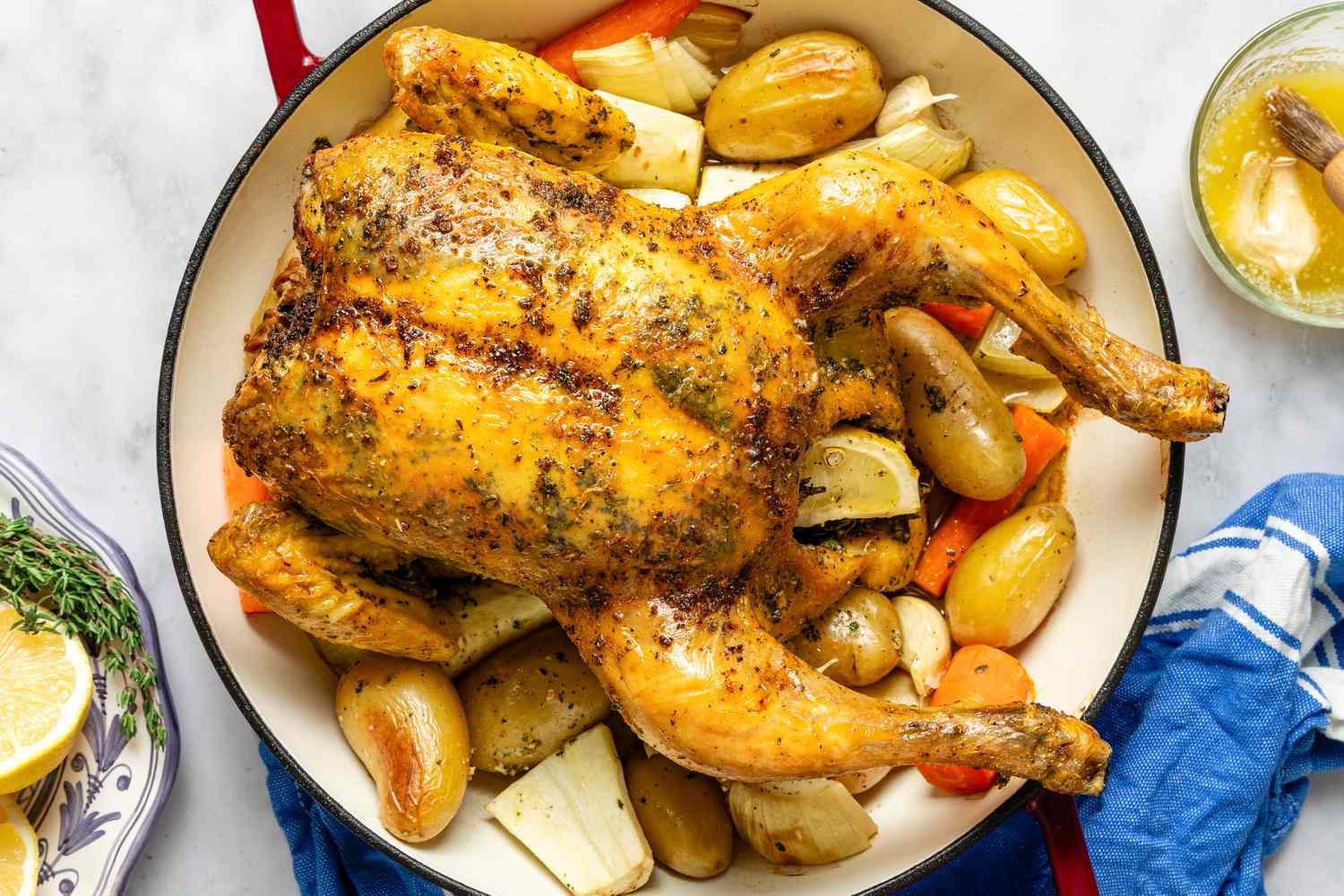
Three key elements make a French-style roast chicken, or poulet rôti, extraordinary: it’s slathered with herbaceous compound butter, roasted over root vegetables, and regularly basted with garlic-infused butter. This chicken will fill your house with the irresistible smell of butter, garlic, and herbs and consistently reward you with a flavorful, juicy roast chicken, complete with root vegetables roasted in the pan drippings.
Step 1: Make a Compound Butter
A compound butter, or beurre composé, is softened butter mixed with flavorful herbs, spices, and garlic. Using it amplifies flavors in all kinds of dishes—melted onto corn on the cob or baked potatoes, stirred into a pan sauce, or simply spread on warm bread.
The Spruce / Julia Estrada
To use a compound butter on a roast chicken, blitz together the butter and flavorings in a food processor, then use your hands to slather it all over the whole chicken, including inside the cavity and under the skin. For a French-style roast chicken, I use a quarter cup of softened butter, a quarter cup fresh parsley plus a couple of tablespoons of other fresh herbs (like sage, rosemary, and thyme), a chopped garlic clove, the zest of 1 lemon, two teaspoons of kosher salt, and one teaspoon of black pepper.
Don’t think of it as a strict recipe; you can skip or swap ingredients you don’t have. For example, if you don’t have any fresh herbs on hand, substitute two teaspoons of herbes de Provence, another favorite dried herb blend, or even just a couple teaspoons of dried thyme.
Don’t forget to save the lemon and some fresh sprigs of thyme and rosemary to stuff the cavity.
Simple Tip!
If you dry-brined the chicken (another favorite roast chicken hack), skip the salt in the compound butter.
Step 2: Roast Over Root Vegetables
Most roasting pans come with a rack that elevates the chicken for better airflow, allowing it to cook and brown more evenly. But the French know that you don’t need a rack to do the job. Plus, most roasting pans are too large for a roast chicken, causing the drippings to evaporate too quickly and burn onto the bottom of the pan.
Instead, they roast the chicken on a bed of root vegetables in a pan just large enough to fit the chicken. The root vegetables act like a rack, with the bonus of a roasted vegetable side dish with no extra time. Plus, the vegetables infuse the drippings with even more flavor, making it perfect for homemade gravy.
My favorite vegetables to use are carrots, parsnips, fingerling or baby potatoes, whole unpeeled garlic cloves, and onions. Others to try are fennel, turnips, celeriac, rutabagas, shallots, and sweet potatoes, as they all roast beautifully. Since they roast for a long time, try slicing the vegetables into large pieces, about 1 to 1 1/2-inch cubes. Once the chicken and vegetables are snug in the pan, roast following this simple roast chicken recipe.
Step 3: Baste the Chicken
Basting is the technique of periodically moistening a roast with fat, sauce, or the roast’s own juices while it cooks. It keeps the meat tender and moist while encouraging browning. A passionate French cook would never miss the chance to develop deeper caramelization, a juicier roast, or richer flavor—even if it means hanging out by the oven.
As the chicken roasts, use a brush to baste it every 15 to 20 minutes with the pan juices. For an extra-special roast chicken, keep a small saucepan on very low heat with a quarter cup of melted butter and a couple of crushed garlic cloves, and baste the chicken with it.
Simply Recipes / Mark Beahm


Leave a Reply